FRAMEWORKS
Jobs-to-be-Done (JTBD)
ROLE
Product Manager
DURATION
July 2025 - January 2026
FORMAT
24 mentored sessions · 252 hrs total
OUTCOME
Validated low-fidelity MVP
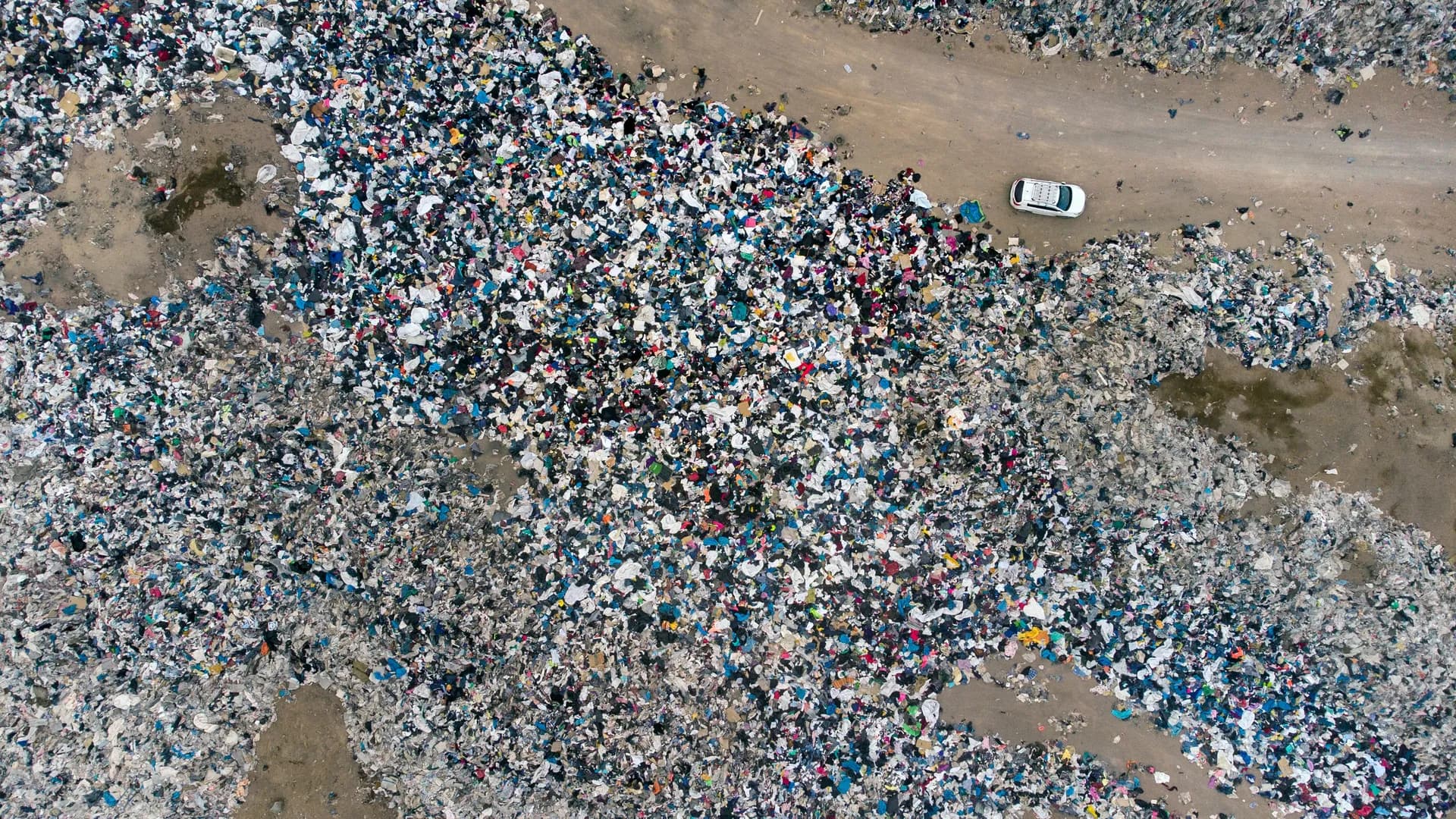
Fashion brands generate significant deadstock - unsold inventory and leftover materials that typically end up in landfill or are destroyed. Large brands lack a dedicated system to track this inventory in a way that connects it to upcycling opportunities. The question I set out to answer: could a purpose-built deadstock management platform for large fashion brands give them visibility over their deadstock and help them manage relationships with upcycling partners, manufacturers, and internal teams - turning a waste problem into a traceable, manageable process?
Before defining any solution, I invested in understanding the problem deeply. I conducted structured user interviews using the Jobs-to-be-Done framework - focusing not on what users do, but on what outcome they are trying to achieve and what is getting in the way. I built 2-3 user personas based on roles within large fashion brands who would interact with the system, and synthesised interview findings into thematic clusters to arrive at a clear, validated problem statement.
FRAMEWORKS
Jobs-to-be-Done (JTBD)
ARTEFACTS
User personas · Interview script · Thematic insight clusters · Problem statement
With a validated problem statement in hand, I moved into solution design. I defined the product vision using a Product Vision Board - aligning the target user, their needs, the product's key features, business goals, and competitive landscape on a single canvas. I built a Competitive Matrix to map existing solutions against key dimensions - features, pricing, target users, and gaps - to understand where the market was underserved and where the product could differentiate. To define what to build first, I used a Value vs. Effort Matrix to prioritise features, then translated priorities into a User Story Map and a structured Product Backlog. Hypotheses were documented in a Hypothesis Table - each mapped to an assumption being tested, a test method, and success criteria.
FRAMEWORKS
Product Vision Board · Value Proposition Canvas · Competitive Matrix · Value vs. Effort Matrix · Hypothesis Table
ARTEFACTS
Product Vision Board · Value Proposition Canvas · Competitive Matrix · Market Research · MVP Feature Definition · Prioritised Product Backlog · User Story Map
I translated the MVP scope into a low-fidelity interactive prototype using Google AI Studio, covering the core user flows. Rather than building for completeness, I built for testability - focusing on the flows most critical to validating the core hypothesis. I developed a User Testing Protocol, ran sessions with 5-7 users, documented findings in a User Testing Results Summary, and iterated on the design based on what I learned.
FRAMEWORKS
Low-fidelity Prototyping · Usability Testing
ARTEFACTS
Low-fidelity prototype · User Testing Protocol · User Testing Results Summary
With a validated prototype, I shifted focus to launch readiness and measurement. I defined the North Star metric as the volume of deadstock inventory successfully matched to upcycling partners per month - the single number that captures whether the product is delivering its core value. Not just that brands are tracking deadstock, but that material is actually moving through upcycling channels. I developed a GTM plan covering market segmentation, positioning, channel strategy, and the steps needed to move from prototype to first users.
FRAMEWORKS
GTM Planning · North Star Metric
ARTEFACTS
GTM plan · North Star metric definition
This project was my first end-to-end experience as a Product Manager - from an idea on paper to a validated, launch-ready MVP. What I valued most was the breadth of the role: understanding the market, shaping the product direction, defining how it reaches its first users, justifying every decision, and testing every assumption. This is product management at its most complete - driving a business idea forward, not just shipping features - and that scope is what I find genuinely compelling about it.
Jobs-to-be-Done (JTBD) - for structuring user interviews around outcomes, not features
Product Vision Board - for aligning product direction, user needs, and business goals on a single canvas
Value Proposition Canvas - for mapping customer pains, gains, and the product's fit
Competitive Matrix - for mapping existing solutions against key dimensions to identify market gaps
Value vs. Effort Matrix - for prioritising features based on impact and feasibility
Hypothesis Table - for documenting assumptions, test methods, and success criteria
User Story Mapping - for translating priorities into a structured backlog
Low-fidelity Prototyping - for testing ideas with users before committing to build
Usability Testing - for validating flows with real users and iterating based on findings
GTM Planning - for defining market segmentation, positioning, channel strategy, and launch sequencing