4-9%
of clothing and textiles on the EU market are destroyed before anyone wears them
Give every batch a next life.
Hackathon project · AI Hacker House, Equinox Edition by LayerX · Lisbon, 2026
Matchloop is a decision tool for stock managers at large EU fashion brands. It analyses unsold stock batch by batch, recommends the most sustainable route the law allows, matches each batch to a partner, and keeps the records brands now need for compliance.
It continues my product management project on a deadstock management platform for large fashion brands. That project took the idea from research to a tested prototype. At the hackathon, I built a working product around one moment in that workflow: deciding where a batch goes next.
Every season, tonnes of new clothes are left unsold. Brands struggle with massive deadstock and often take the easiest route to disposal - which is also the most harmful for the environment. Since 19 July 2026, large companies in the EU can no longer destroy unsold apparel, accessories or footwear under the Ecodesign for Sustainable Products Regulation (ESPR). Sending unsold stock to recycling counts as destruction too. Exceptions exist, for example for unsafe, damaged or counterfeit goods, but the company has to prove them. From February 2027, brands must also publicly report how much unsold stock they dispose of, why, and where it goes.
That turns a routine warehouse decision into a legal one. Stock managers need to know, for every batch, which routes are allowed and which keep the most value.
4-9%
of clothing and textiles on the EU market are destroyed before anyone wears them
594k
tonnes of textiles destroyed in the EU every year
5.6M
tonnes of CO₂e emitted a year by that destruction (high estimate)
Source: European Environment Agency (EEA), March 2024.
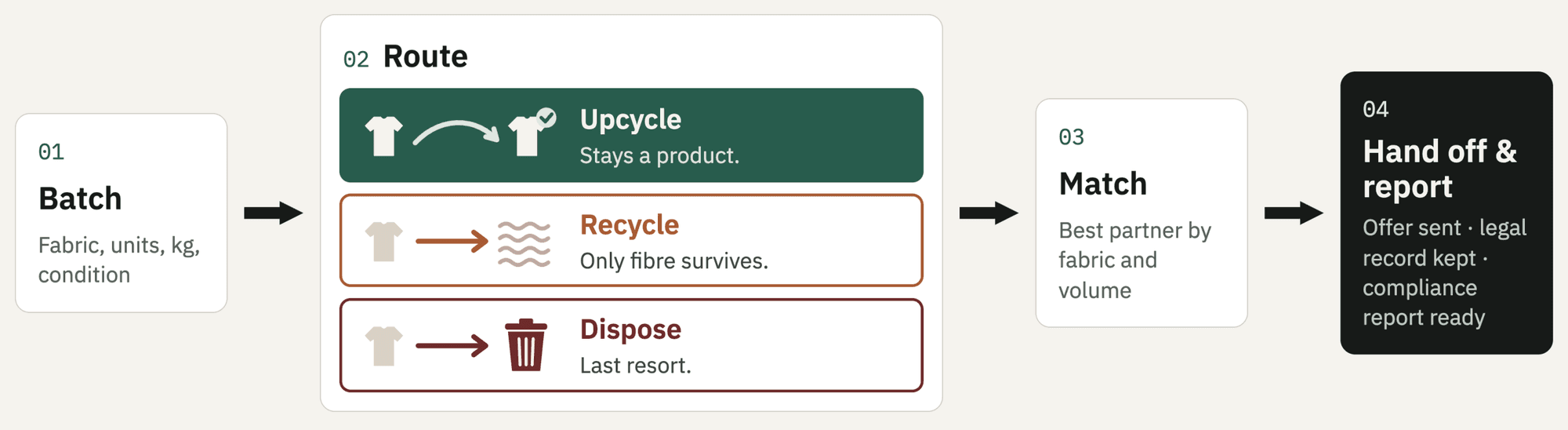
01
Batch
Matchloop reads each batch of unsold stock: fabric, units, weight and condition.
02
Route
It recommends a route. Upcycle keeps the item a product. Recycle, where only the fibre survives, and Dispose, the last resort, are only offered when a legal exception applies. Matchloop records which exception was used.
03
Match
It finds the best partner for the batch by fabric and volume.
04
Hand off & report
It sends the offer and saves the legal record, so the compliance report is ready.
The route is decided by an algorithm that weighs each batch's specifics against the requirements of every route.
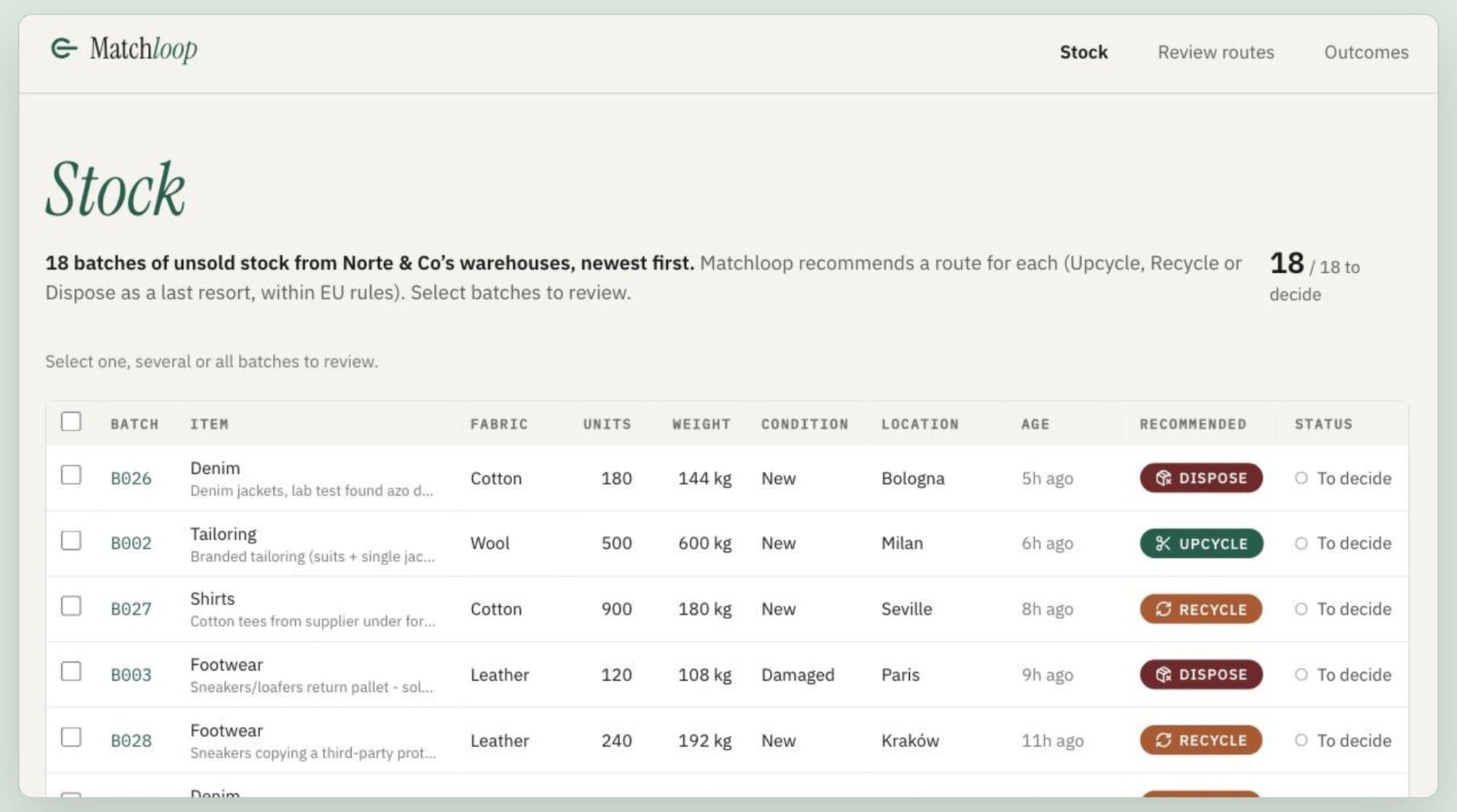
The demo runs on a fictional brand, Norte & Co, with 18 batches of unsold stock across European warehouses. The app has three screens:
Fictional demo data · Not legal advice
I built Matchloop end to end on my own, from product decisions to deployment.
Claude Code
built and refactored most of the app
Cursor
editing, debugging and reviewing code
Next.js
the web app
Supabase
database for batches, partners and the decision log
Vercel
hosting and deployment
Claude API
reads messy stock descriptions and explains each recommendation